
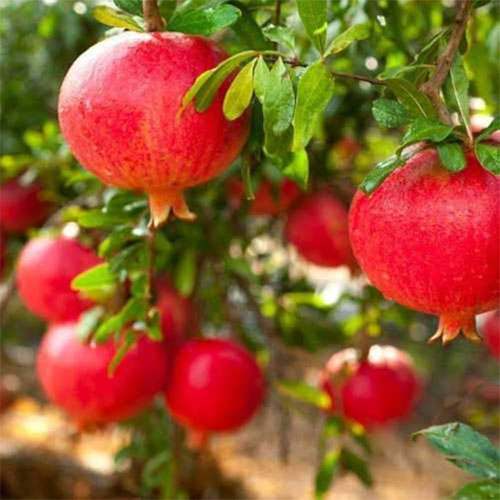
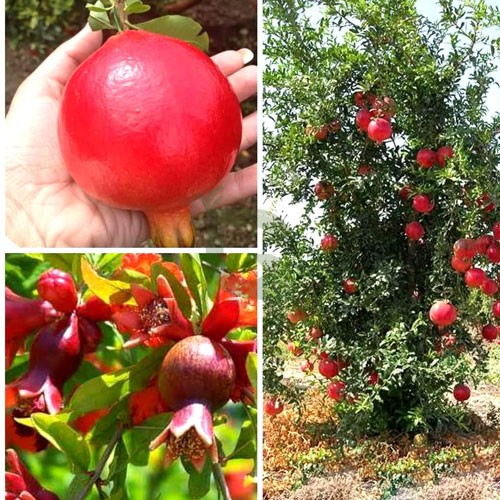
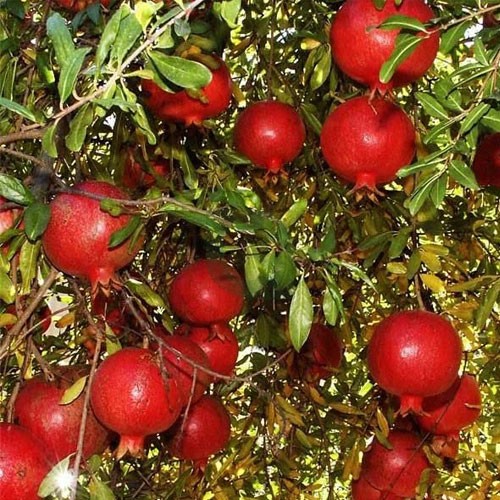
The Pomegranate Bhagwa Anar Layered Live Plant (Punica granatum) is a premium Indian pomegranate variety highly valued for its bright red arils, excellent sweetness, rich juice content, and strong market demand. Bhagwa is one of the most preferred pomegranate varieties for both home gardening and commercial cultivation due to its high yield, attractive fruit colour, and superior taste. Propagated through air layering, this plant grows faster, establishes quickly, and starts fruiting earlier than seed-grown plants. Supplied by Golden Hills Farm, the plant comes healthy in a nursery polybag, ready for planting.
Type of Plant: Air Layered Fruit Plant – Bhagwa Pomegranate (Anar)
Scientific Name: Punica granatum
Fruit Type: Medium to large fruits with bright red arils
Taste: Sweet-tart, juicy, rich flavour
Propagation Method: Air Layering (fast fruiting, true-to-type)
Sunlight Requirements: Full sunlight (6–8 hours daily)
Where to Grow: Home gardens, terrace gardens, open fields, farms
Growing Season: Year-round planting; best during monsoon
Soil Requirements: Well-drained loamy or sandy-loam soil
Plant Height: 1 – 2 feet (at dispatch)
Plant Type: Supplied in nursery polybag
Fertilizer Needs: Organic compost or cow dung every 30–45 days
Life Span: 20+ years productive life
Ideal Growing Temperature: 20°C – 35°C
Blooming / Harvesting Time: Fruits in 8–12 months after planting
Maintenance Required: Low to moderate
Watering Frequency: Moderate; avoid overwatering
Ideal Grow Bag Size: 18×18 inches or larger
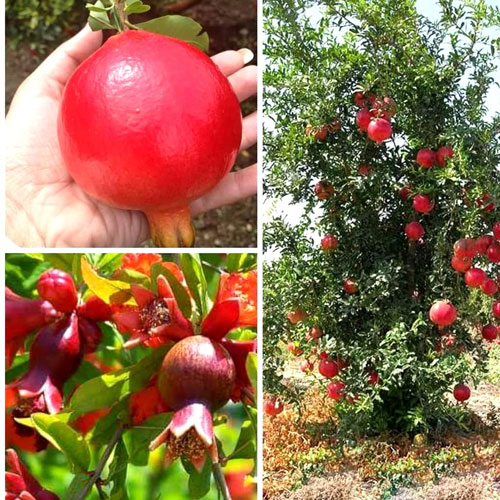
The Bhagwa Pomegranate Layered Plant thrives in tropical and semi-arid regions across India. It performs especially well in warm climates with good sunlight. Planting during June–September helps strong root development. Being air-layered, the plant establishes quickly and starts flowering and fruiting earlier, producing uniform, high-quality fruits.
Use a large 18×18 inch grow bag or pot with proper drainage. Prepare a soil mix using garden soil, compost, and sand (1:1:1). Plant the sapling upright, water well, and place in full sunlight. Monthly feeding with organic manure and light pruning helps improve flowering and fruit yield.
Preparation: Mix compost thoroughly with soil.
Planting: Keep the layered joint above soil level.
Watering: Water immediately after planting; maintain moderate moisture.
Establishment: Air-layered plant settles quickly.
Transplanting: Shift to open soil after root spread if required.
Sunlight: Full sunlight is essential for flowering and fruit colour
Soil: Well-drained soil prevents root diseases
Fertilization: Apply organic manure every 30–45 days
Pruning: Occasional pruning improves branching and fruiting
Pest Control: Neem oil spray every 15 days
Disease Prevention: Avoid water stagnation
Mulching: Helps retain soil moisture
Harvesting: Fruits are ready when rind turns deep red
1. Apply Nutrient-Rich Fertilizers
When your plants begin flowering, use nutrient-rich fertilizers like Organic Bone Meal Powder or Vermicompost. This helps in boosting the bloom and enhances overall yield.
2. Use Organic Fertilizers
Feed your plants with organic fertilizers such as Cow Dung Manure or Neem Cake. Organic options promote healthy soil life.
3. Regular Feeding
Apply fertilizers every 20-25 days to ensure plants receive a steady supply of nutrients. Choose from various options like Cocopeat Compost for moisture retention
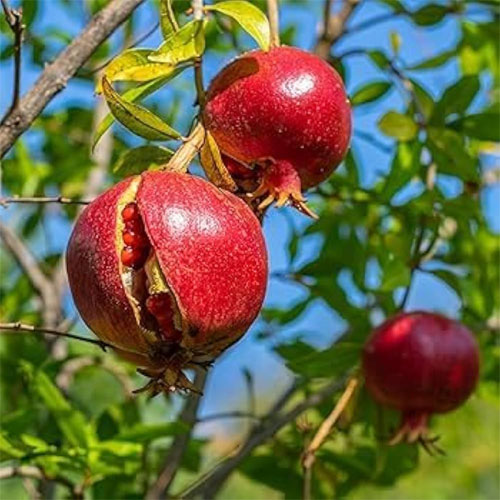
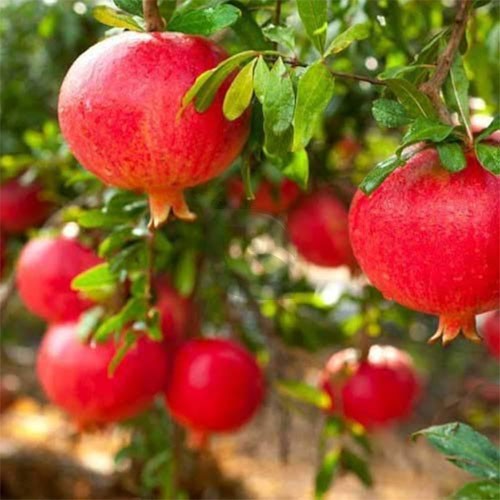
The Bhagwa Anar Pomegranate is known for its deep red glossy fruits, soft juicy arils, and excellent shelf life. It is widely used for fresh consumption, juice extraction, and culinary preparations. The plant is hardy, drought-tolerant once established, and suitable for both home gardeners and commercial growers. Its air-layered propagation ensures early fruiting and reliable performance.
Produces bright red, juicy, sweet-tart pomegranates
Rich in antioxidants, Vitamin C, and iron
Excellent for fresh eating, juices, and desserts
High-yield premium variety
Suitable for pots, gardens, and farms
Low-maintenance and drought tolerant
Avoid overwatering
Provide full sunlight for better fruit colour
Use organic fertilizers only
Protect young plants from frost
Prune lightly; avoid heavy pruning
Problem: Flower drop
Solution: Maintain regular watering and sunlight
Problem: Yellowing leaves
Solution: Improve drainage and add compost
Problem: Pest infestation
Solution: Neem oil spray every 10–15 days
Bhagwa Anar, Anar, Dalim, Mathalam, Pomegranate, Punica Fruit, Lal Anar.
Q1: When will the Bhagwa plant start fruiting?
👉 Usually within 8–12 months due to air layering.
Q2: Can it grow in pots?
👉 Yes, it grows very well in large grow bags.
Q3: Is Bhagwa good for juice?
👉 Yes, it is one of the best juice varieties.
Q4: Does pruning help fruiting?
👉 Yes, occasional pruning improves yield.
Sign in now to receive a 5% instant discount on your first order when using code WELCOME. Begin your organic journey today!
By logging in, you're agreeing to our Terms of Service and Privacy Policy.


Pranav Joshi
Plant healthy condition me aaya aur packing me moisture balanced tha.
Aparna Pillai
New leaf flush 1 week ke andar dikhne laga.
Rakesh T
The plant remained stable after shifting to a bigger pot.
Lakshmi Prasad
Watering schedule follow kiya to growth steady rahi.
Neha J
growing start acchi lag rahi hai aur leaf colour theek hai
Maheshwari Rao
Bhagwa anar plant ki branching clean thi aur stem firm laga.
Babu
Leaves fresh the, koi major drop nahi hua.
Neel
Transplanting was smooth with minimal stress.
Shama R
Growth resumed steadily after transplant.
Nandha
Terrace garden me place karne ke baad plant upright raha.